
By Khalil Abdullah
Contributing Writer
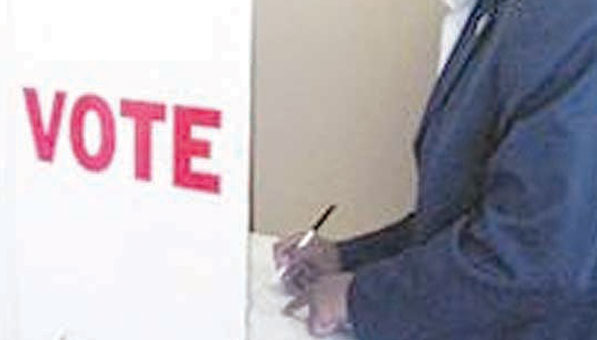
As voter suppression laws continue to be debated in states across the country, members of the African American press and voting rights advocates say the repercussions of that debate are already being felt. The most immediate metric, they note, will be whether voter turnout is reduced.
For some observers, that is a likely prospect. “Talking about the guys who are not going to vote, four years ago, they took chances,” said Harold Meeks, publisher of the Tell Us USA News Network, an online news magazine with bureaus in several cities. “I owe $23,000 in child support, but I’m going out to vote for the Black man,” Meeks said, describing a hypothetical Detroit voter in 2008.
“They’re not going to take those same chances again, particularly with these other voices saying that we’re going to scrutinize you,” he continued. “We’re going to see if there are any warrants out for you, so don’t you dare register. It’s that intimidation factor. It’s real.”
_____________________________________________________________
“I haven’t seen as many 18- or 19-year-olds registering voters
outside of grocery stores…like during the last election.”
Meeks acknowledged that restrictive laws in several states have been rescinded but feels those who sponsored them “have got their point across” and that, in a tight election, those absent votes could weigh on the outcome. Court victories — most recently in South Carolina and Pennsylvania — have dispensed with the need for photo IDs in this year’s election.
Still, the furor over that issue, and the repeated attempts at totally repealing early voting, only recently stymied in Ohio, for example, and efforts to purge voting rolls and curtail registration periods, have engendered a spectrum of responses.
Misinformation in Minnesota
Charles Hallman, staff writer for the Minnesota Spokesman-Recorder in Minneapolis, said what he fears most is misinformation. “Emails have been sent out to churches telling them that their parishioners might not be eligible to vote this year even though there have been no changes in the registration forms,” he said. Hallman has taken it upon himself to tell ministers to keep the correct information in the pulpit and has encouraged them to urge parishioners to check with the secretary of state’s office if they have questions regarding eligibility.
Hallman added that his paper’s publisher and staff have been consistent in running stories and weekly updates on why voting matters. “It’s not just about the presidential election.” In November, Minnesota citizens will be voting on two hotly contested ballot initiatives to amend the state’s constitution. One would legally define marriage as between one man and one woman; the other would require a photo ID for future elections.
Hallman said his paper has been neutral on the marriage amendment. On the photo ID law, he says passage would negatively and disproportionately affect a wide swath of citizens.
“That’s Native Americans, that’s Blacks, that’s Latinos,” Hallman said, pointing to a report showing that thousands of Minnesotans lack the photo ID required under the amendment. He contends the photo ID amendment is a GOP-sponsored strategy to limit the number of Democratic voters, African Americans among them. And though Minnesota is considered a blue state, he said, voter attrition through whatever method has electoral consequences.
“We don’t have a big turnout of Black people who come out to vote for a number of reasons,” Hallman explained, noting that their relatively low participation in the 2010 election was likely a factor in Republicans gaining control of the state’s legislature.
Young voters in Old Dominion
While a low turnout of African Americans in Minnesota might not lose the Oval Office for the Democratic Party, it certainly could in Virginia. With 13 electoral votes at stake, both parties are aggressively courting Old Dominion voters.
Virginia enacted a voter photo ID law this year, one considered by both supporters and detractors as having the least onerous requirements among laws of its type. For Foster Stringer, who has spent time visiting schools as part of a broad-based voter registration drive spearheaded by the National Coalition on Black Civic Participation, how the state’s young voters will respond has yet to be answered.
“These were majority Black and Hispanic kids, very few White children in these schools,” said Stringer, who recently retired as director of human and civil rights for the American Federation of Teachers. He said that even before the second presidential debate, “there would be this interest in talking about the election. ‘We gotta be talking about Pell grants and student loans. I want to go to college, but I don’t want to get saddled with all that debt.’”
Stringer said he had not anticipated their interest. “After all the negative talk we hear about a lost generation of African American youth, I was surprised. It was very encouraging for me.” He attributes that enthusiasm, in part, to the 2008 election of President Obama.
“Some of these kids were 13 when Obama was elected, and now they’re at an age where they want to be responsible.” He said the speculation that an African American president would manifest in unexpected ways is being borne out.
In New Orleans, poverty is
suppression
The picture in New Orleans appears less bright for David Baker, associate editor for the Louisiana Weekly. He says he’s yet to see the kind of eagerness to register described by Stringer.
“I haven’t seen as many 18- or 19-year-olds registering voters outside of grocery stores…like during the last election.” He said he is aware that there were ongoing voter registration campaigns in the city, but added, “New Orleans has been mired in crime, violent murder crime. A lot of people’s focus has been on that issue.”
Baker also expressed disappointment in the failure of both candidates to draw clear lines around what middle class means for different communities. That Obama and Romney would consider a person in the African American community who even neared earning the $200,000 to $250,000 cap they cite as being middle class is not grounded in the reality of American life, he said.
Poverty, Baker insisted, is the ultimate voter suppression issue. Not only does it impose its own limits on civic participation, but its absence in policy discussions erodes confidence in America’s future.
“I don’t see poverty being debated. That’s the problem that continues to be unaddressed.” Baker said. “I actually heard my grandmother talk about the importance of voting, but then she’ll say, ‘No matter who wins the election, I’m still going to be poor.’”
Thanks to New America Media for sharing this story with us.
The messaging I am getting from this article is that there are no Black Rpublicans. Not every African American is a Democrat. Not every African American in Minnesota is a Democrat. I would like to read opinions from conservative African Americans in Minnesota when talking about controversial issues such as this one.
Great story. Voting is so critical. It’s contemptible if these voter suppression tactics have detered even one voter.